


You probably know where your biggest assets are. The question is whether you know their condition, their history, who last touched them, and when they are due for maintenance or replacement. Most businesses can answer one or two of those questions on any given day. Very few can answer all of them without a spreadsheet, a phone call, or a mild panic. That gap is exactly what asset management software is designed to close.
This guide will help you understand what the category actually covers, what to look for when evaluating platforms, and how to avoid the most common mistakes buyers make before they sign a contract.
What the Category Actually Covers
"Asset management" gets used loosely, so it is worth pinning down what you are buying. At its core, asset management software tracks physical or digital assets across their entire lifecycle, from acquisition through disposal. That includes location tracking, maintenance scheduling, depreciation calculation, audit trails, and reporting.
Within that broad definition, the market splits into a few distinct flavors. IT asset management (ITAM) focuses on hardware and software inventories, license compliance, and device lifecycles. A platform like Device42 is built squarely for that world, mapping infrastructure dependencies alongside the physical inventory. Fixed asset management leans toward finance and facilities, handling depreciation schedules and audit-ready records. FMIS sits in that space, combining fixed asset accounting with broader facilities and maintenance management.
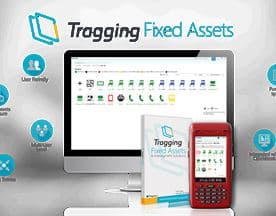
Then there are platforms built around physical tagging and field operations, where assets move around, get checked out, or live in the field. Solutions like Tragging and MapYourTag are built for that reality, using QR codes, RFID, or GPS to connect physical objects to their digital records.
Knowing which flavor you need before you start evaluating is not a small thing. Buying an IT-focused platform when you need field asset tracking, or vice versa, will leave your team working around the software rather than with it.
The Features That Actually Matter
Every vendor in this space will show you a dashboard in the demo. Dashboards are easy to build and easy to show. What you actually need to pressure-test is the unglamorous stuff underneath.
Data import and migration
You already have asset data somewhere, even if it is a chaotic spreadsheet. How a platform handles that import tells you a lot about how it will handle your data going forward. Can it ingest your existing records cleanly? What happens to historical data, to incomplete records, to assets with non-standard fields? If the vendor waves this off, that is a warning sign.
Integration with systems you already run
Asset management does not live in isolation. Procurement feeds it. Maintenance schedules connect to facilities management or field service tools. Finance needs depreciation data. Before you shortlist a platform, map out which existing systems it needs to talk to and confirm the integration story is real, not aspirational.
Audit and reporting capabilities
At some point, you will need to prove what you own, where it is, and what it is worth. Whether that is for an internal audit, an insurance claim, or a regulatory requirement, the platform needs to produce clean, trustworthy reports without three hours of manual cleanup. Ask vendors to show you audit reports generated from real data, not a slide.
Mobile and field usability
If your assets live outside a server room or an office, your team needs to update records in the field, not back at a desk. Platforms like Tracmor emphasize mobile-accessible tracking for exactly this reason. A platform that is clunky on a phone will see adoption collapse the moment your team steps outside.
Where Buyers Go Wrong
The most common mistake is buying for the current problem and ignoring the next one. A team struggling to track a few hundred items might buy a lightweight tool that works fine today but hits a ceiling when the inventory grows or the business adds locations. Scalability is boring to evaluate in a demo and expensive to ignore when you outgrow a platform.
The second mistake is underestimating the change management side. Software does not track assets. People using software consistently track assets. A platform that requires extensive training or forces unnatural workflows will get bypassed. Your team will revert to spreadsheets or whiteboards, and the software becomes expensive shelf-ware. Evaluate how the platform fits your team's actual working patterns, not an idealized version of them.
The third mistake is treating the vendor's feature list as the product roadmap. Ask what was released in the last twelve months. Ask what is actually on the roadmap. A platform that has not had meaningful development in two years is not standing still by accident.
Evaluating the Shortlist
Once you have two or three platforms in serious contention, run a structured pilot rather than relying on demos alone. Pick a real subset of your asset inventory, import it, and have the people who will actually use the software work with it for a defined period. The friction points that emerge in a real pilot are the ones you will live with in production.
A platform like xAssets lends itself well to this kind of evaluation because it covers a broad feature set, which means a pilot will surface whether your team actually uses the depth on offer or finds it overwhelming. Breadth is only valuable if your team can navigate it without constant support.
Pay attention to the vendor relationship too. Asset management software tends to be a long-term commitment. A vendor that is responsive, transparent about limitations, and clear about support terms is worth more than a flashier product from a team that goes quiet after the contract is signed.


Before You Buy
Three things are worth confirming before you commit. First, that the platform can handle your asset types without material customization. Second, that the integration with your core systems is live and supported, not on a roadmap. Third, that the pricing structure does not punish growth in ways that will create painful conversations in two years.
The right asset management platform does not just tell you where things are. It tells you what things are worth, what condition they are in, and what decisions you should be making about them. That is the standard to hold any vendor to.


