


You run a farm, not a spreadsheet. But somewhere between tracking inputs, managing compliance records, monitoring crop health, and making sense of seasonal finances, the paperwork starts to feel like a second job. That is the moment most operators start looking at farm management software and asking whether it can actually help or just add another layer of complexity. The honest answer is that it depends almost entirely on how you choose and implement it.
What This Software Actually Does
Farm management software is a broad category. At its most basic, it is a digital record-keeping system for what happens on your land: inputs like seed, fertilizer, and chemicals; field activities like planting dates and harvest yields; labor hours; and equipment usage. More capable platforms layer on financial tracking, crop planning, compliance documentation, and data from external sources like weather feeds or satellite imagery.
The risk in buying this category is treating it like a single product type when it is really a spectrum. A livestock-focused platform is designed around animal health records, breeding cycles, and feed management. A row-crop platform is built around field mapping, agronomic inputs, and yield analysis. Some tools serve both, but usually with trade-offs in depth. Knowing which kind of operation you are running is the first filter, and it matters more than brand recognition or price.
The Features That Actually Earn Their Keep
Not every feature in a farm management platform will earn its keep on your specific operation. These are the ones worth interrogating before you buy.
Field and crop tracking
The core of most platforms is a field register: a map of your parcels, the crops planted on each, and a log of every activity that touches them. This sounds simple, but the quality varies considerably. Some systems let you draw field boundaries with precision, link those boundaries to activity logs, and generate reports by field or crop type. Others offer a flat list with minimal spatial context. If you manage multiple paddocks or lease land across different locations, the mapping capability matters a great deal.
Input recording and traceability
Chemical and fertilizer records are not just useful for planning. In many regions they are a compliance requirement, and in any premium or export market they can affect your ability to sell. A platform that makes input recording fast and searchable, and that can generate a chemical use summary on demand, saves real time when an auditor or buyer asks questions. AGRIVI is one platform built with traceability and compliance documentation as core functions, which is worth noting if regulatory record-keeping is a priority for you.
Financial visibility
Some platforms integrate basic financial tracking: cost-per-hectare, budget versus actual, and profitability by crop or enterprise. This is genuinely valuable because farm financials are seasonal, lumpy, and easy to misread when you are working from memory. That said, most farm management tools are not accounting software, and you should not expect them to replace it. The useful middle ground is a platform that captures field-level costs accurately enough to inform decisions, without pretending it is a general ledger.
Labor and equipment management
For operations with employees or contractors, tracking who did what, when, and on which paddock closes a common gap in farm records. Equipment management, meaning service schedules, usage hours, and fuel costs, helps with cost allocation and maintenance planning. These features tend to be more developed in platforms designed for larger or more complex operations. Kurraglen Industries focuses specifically on livestock and property management in this space, reflecting how different the requirements can be when animals and machinery are both in the picture.
What to Watch Out For Before You Buy
Fit to your production type
This point cannot be overemphasized. A platform built for broadacre grain production is not the right tool for a mixed horticulture and livestock operation, even if both qualify as "farm management software." Look for platforms that list your specific production type in their feature descriptions, not just in their marketing copy. Ask vendors directly: how many customers in my production type are using this, and what do they use it for?
Data entry friction
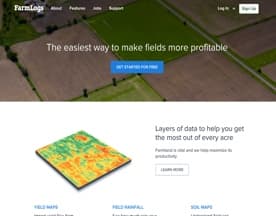
The best platform in the world fails if recording activities takes longer than writing them in a notebook. Field-level usability matters. Is there a mobile app that works offline when you have no signal? Can you log a spray application in under two minutes? Can you find last season's records quickly? FarmLogs has built much of its product identity around reducing data entry burden, which is a reasonable design priority given how often record-keeping falls behind in practice.
Integration with other tools
You probably already use something, whether that is an accounting package, a precision agriculture device, or a weather service. Check what integrations a platform offers and how well they actually work. Bidirectional data flow is usually better than a one-way export, and native integrations are generally more reliable than third-party connectors. If a vendor says "we integrate with everything," ask for a specific list and test the ones you actually need.
Support and training
Agricultural software vendors range from large platforms with structured onboarding to small teams where the founder takes support calls. Neither is automatically better, but you should know what you are buying. Ask about onboarding, ongoing support channels, and whether help is available during your busiest periods, which for most operators means planting and harvest, not January.
Making the Call
The most common mistake buyers in this category make is evaluating features before clarifying purpose. Before you book a demo, write down the three or four things that currently cost you the most time or create the most risk on your operation. Those are your requirements. Everything else is noise.
Trial periods are standard in this category. Use them properly: enter real data from a recent season, test the workflows you will actually use every day, and involve the people who will do the recording. A platform that works well for the owner but frustrates the person logging spray records will quietly fail within a few months.
Farm management software earns its place when it reduces the cost of knowing what is happening on your operation. The platforms that do that well tend to be ones that were designed around how farmers actually work, not how software engineers imagined they might.


