


Most teams that buy public relations software are chasing the same thing: more coverage with less scrambling. What they get depends almost entirely on whether they bought the right type of tool for the work they actually do. The category is broad, the feature overlap between platforms is significant, and the marketing language all sounds similar. This guide cuts through that.
The Category Is Not One Thing
PR software covers a wide range of capabilities, and treating it as a monolithic category is the first mistake buyers make. At one end, you have media database and outreach tools that help teams find journalists, track relationships, and manage pitching campaigns. At the other end, you have press release distribution platforms that push content to wire services and news outlets at scale. Between those poles, you'll find media monitoring tools, coverage analytics dashboards, influencer databases, and newsroom management systems.
A team that mostly needs to distribute press releases has completely different needs from a team that is managing a hundred journalist relationships and tracking every interaction. Before you evaluate any platform, be honest about which category of work consumes most of your team's time.
BuzzStream focuses on the relationship and outreach side of that spectrum, built for teams managing ongoing media and influencer contact. ACCESS Newswire, on the other hand, is oriented around press release distribution and reaching broad audiences through wire syndication. Neither is better in the abstract. They solve different problems.
What the Best Tools Actually Do Well
When PR software works, it saves time on the mechanical parts of the job. Maintaining an up-to-date media contact database is genuinely painful to do manually, and a good platform keeps that current for you. Tracking which journalists have opened your pitches, responded, or covered your stories removes a lot of guesswork from follow-up decisions.
Coverage monitoring is another area where software earns its cost. Manually searching for mentions across news sites, blogs, and social channels is slow and unreliable. Automated monitoring catches what manual searches miss and aggregates it somewhere useful.
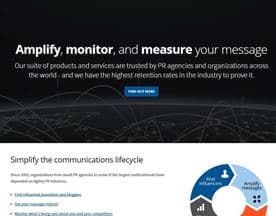
BurrellesLuce has long been known for its media monitoring and clipping capabilities, particularly for teams that need broadcast and print coverage tracked alongside digital. Agility PR Solutions combines database management, distribution, and monitoring in one environment, which suits teams that want fewer separate tools to manage.
The better platforms also help you prove impact. Reporting on PR is notoriously difficult because the causal chain from a pitch to a business outcome is long and indirect. Good software gives you coverage metrics, audience reach estimates, and share-of-voice data that at least lets you frame the conversation with stakeholders in concrete terms.
Where Most Platforms Disappoint
Here is the honest part. PR software is not going to make your pitches more interesting. It will not substitute for strong media relationships, genuine news value, or a story that actually resonates with the journalist's audience. Buyers who expect the software to generate results rather than support the work that generates results tend to be disappointed.
Contact database quality is also a persistent gripe across the category. Lists go stale quickly as journalists move between outlets, change beats, or leave the industry. Even well-maintained platforms have accuracy gaps, and teams that rely entirely on the software's database without doing their own verification tend to waste outreach effort on wrong contacts.
Integration with the rest of a communications stack is another friction point. If your team works heavily in a CRM or a content platform, check carefully whether the PR tool you are evaluating connects to those systems in a way that is actually useful, not just technically possible.
How to Evaluate Platforms for Your Team
Start by listing the three activities that consume the most time in your current PR workflow. If pitching and relationship management tops that list, prioritize tools with strong contact databases, interaction tracking, and outreach sequencing. If distribution is the bottleneck, focus on the reach and syndication network of wire-based platforms.
Team size matters here too. A solo PR manager at a small company needs a very different feature set from an in-house team at a large organization that is coordinating with agencies across multiple regions. Platforms like Cision are built to serve enterprise-scale communications teams with complex reporting needs, while other tools in the category are better calibrated for smaller teams that want simplicity and speed.
For teams managing a press room or media assets alongside outreach, solutions like Ipressroom address the need to centralize press materials, images, and releases in one branded environment that journalists can access directly. That is a different problem from outreach management, but it is a real one.
Ask vendors specifically about database freshness, update frequency, and how they handle contact verification. Ask to see the reporting output before you commit, because the dashboards vary dramatically in usefulness. And run a real pilot with your actual contact list and a genuine campaign before signing an annual contract.
The Criteria That Actually Separate Good Fits From Bad
- Coverage of your specific media landscape. A platform with deep coverage of trade publications in your industry is worth more than one with broad general coverage that misses your niche.
- Usability for your team's actual skill level. Complex platforms with steep learning curves sit unused. A tool your team actually opens every day beats a comprehensive one they avoid.
- Reporting that speaks your stakeholders' language. If you need to justify the PR function to leadership, the platform's analytics need to produce output you can actually use in that conversation.
- Honest pricing relative to your volume. Many platforms price on the number of users, contacts, or distribution sends. Model your actual usage before agreeing to a tier.








The Real Question Before You Buy
The teams that get the most from PR software are those that already have a working process and are using the tool to scale or streamline it. If your outreach strategy is unclear, or your messaging is still in flux, software will not fix that. Sharpen the strategy first, then choose the platform that best supports executing it at the pace and scale you need.


