


Customer risk scoring sits at the foundation of every AML program. When it is inaccurate, static, or poorly integrated, everything downstream suffers: transaction monitoring thresholds misfire, enhanced due diligence (EDD) triggers are missed, and regulators question whether risk ratings truly reflect the institution’s customer base.
This guide compares four leading AML risk scoring platforms based on the dimensions that matter most to compliance leaders and technology teams in 2026.
What Actually Matters in AML Risk Scoring
Risk scoring has evolved far beyond static onboarding questionnaires and annual review cycles. In environments characterized by real-time payments, cross-border flows, and digital onboarding, regulators increasingly expect customer risk ratings to reflect actual behavior — not just inherent attributes collected at onboarding.
Modern AML risk scoring platforms are differentiated across six critical dimensions:
1. Real-Time Score Updates
Does the customer risk rating update immediately when new behavioral signals occur, or only during scheduled review cycles? Static scores create a dangerous gap between risk reality and documented risk posture.
2. Configurability of Risk Factors
Can compliance teams independently adjust weightings, thresholds, and factor definitions without engineering support? No-code configurability is now a baseline expectation.
3. Integration with Investigation Workflows
Does the risk score directly inform alert triage, case routing, and EDD triggers? Or does it operate as a standalone metric requiring manual cross-referencing?
4. Audit Trail and Explainability
Can the institution demonstrate exactly why a risk score changed, when it changed, and which data points drove the change? Without traceable reasoning, risk scoring becomes a governance liability.
5. Behavioral vs. Inherent Risk Coverage
Does the platform incorporate dynamic behavioral signals (transaction velocity, counterparty shifts, anomaly detection) alongside inherent attributes (geography, entity type, PEP status)?
6. Deployment Speed and Time to Value
How long does it take to move from contract to production? For large institutions, implementation certainty matters; for fintechs, speed can be a competitive advantage.
With these criteria in mind, the following platforms represent four prominent approaches to AML risk scoring in 2026.
1. Flagright
Dynamic Risk Scoring | Enterprise-Ready | Global Deployment
Flagright’s Customer Risk Scoring operates as a real-time operational layer rather than a static reporting function. Scores update dynamically based on both inherent and behavioral risk factors, ensuring that monitoring thresholds, EDD triggers, and case routing decisions reflect current customer activity.
In practice, this means that material behavioral shifts — such as sudden cross-border flows, rapid fund movement, or exposure to high-risk counterparties — immediately impact the customer’s risk profile.
Flagright is deployed by banks, fintechs, and Fortune 500 companies across more than 30 countries, including UniCredit, GoCardless, Betterment, and Tipalti. The platform maintains SOC 2, ISO 27001, GDPR, DORA, and CCPA compliance, with 99.998% uptime and hundreds of millions of transactions processed monthly.






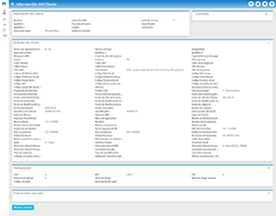



How the Risk Scoring Engine Works
Flagright uses a dual-track scoring model:
- Inherent risk factors: geography, entity type, business sector, product usage, onboarding channel, PEP/sanctions status
- Behavioral risk signals: transaction velocity, anomaly detection, counterparty risk, alert history, and pattern deviations
These streams update independently and feed into a composite risk score that drives downstream automation.
Key Capabilities
- Real-time recalculation: Scores update immediately when monitoring rules trigger, screening hits occur, or anomalies are detected.
- No-code configurability: Compliance teams can adjust weightings, thresholds, and tier definitions without engineering involvement.
- Native investigation integration: Risk scores directly inform AI-driven investigation routing and automation thresholds.
- Automated EDD triggers: Threshold breaches automatically initiate enhanced due diligence workflows.
- Full audit trail: Every score change is logged with contributing factors and timestamps.
- Maker-checker governance: Overrides and configuration changes require approval workflows.
- Cross-entity risk aggregation: Beneficial ownership and related-party relationships inform network-level risk exposure.
Best Suited For
Financial institutions that require tightly integrated, real-time risk scoring across monitoring, investigation, and regulatory reporting workflows — particularly banks, large fintechs, payment processors, and crypto exchanges operating across multiple jurisdictions.
2. NICE Actimize
NICE Actimize is a long-established enterprise AML provider. Its X-Sight Entity Risk solution adopts an entity-centric model, placing the customer profile at the center of risk assessment.
The platform is recognized for broad regulatory acceptance and deep AI/ML capabilities across the AML lifecycle. Institutions already operating Actimize’s broader ecosystem (SAM for monitoring, ActOne for case management) benefit from native integration within the suite.
However, Actimize deployments are often complex. Implementation timelines can extend several months, and configuration changes frequently require vendor involvement. The platform’s structured data model and modular pricing approach typically align best with large, tier-one institutions.
Strengths
- Entity-centric risk modeling
- AI/ML capabilities across 70+ jurisdictions
- Strong regulatory familiarity
- Integrated ecosystem across monitoring and case management
Limitations
- Complex implementation and customization
- Vendor dependency for configuration changes
- Steep learning curve
- Enterprise-scale pricing
Best Suited For
Large banks and financial institutions with established AML infrastructure and resources to support complex implementations.
3. SAS Anti-Money Laundering
SAS leverages its long-standing analytics expertise in its AML risk scoring module. The platform emphasizes statistical modeling and machine learning, particularly in behavioral analytics and demographic change tracking.
SAS supports dynamic EDD triggers and strong network analytics capabilities for identifying hidden relationships. Low-code administration has improved flexibility compared to earlier versions.
Operational complexity remains a consideration. Institutions often require data science expertise to optimize and maintain risk scoring models effectively. Pricing structures typically target mid-to-large institutions.
Strengths
- Advanced analytics and machine learning models
- Behavioral-driven EDD triggers
- Strong network analytics
- Broad data integration capabilities
Limitations
- Requires technical expertise to configure and tune
- Consultant dependency for advanced features
- Less optimized for API-first fintech environments
- Investigation integration less native than specialist AML platforms
Best Suited For
Mid-to-large institutions with internal analytics capability seeking highly customizable and statistically sophisticated risk models.
4. Signzy
Signzy approaches AML risk scoring through identity-first architecture, combining KYC, KYB, and AML scoring within a unified API-based platform covering 240+ countries.
Its risk engine integrates sanctions screening, PEP checks, adverse media, and transaction analytics into configurable risk outputs. The platform is particularly strong in onboarding automation, with high straight-through processing rates.
While transaction monitoring is supported, investigation workflow depth is less extensive than dedicated AML platforms. The pay-per-call pricing model can introduce cost variability at higher volumes.
Strengths
- Unified API for KYC, KYB, and AML
- Configurable risk scoring workflows
- Strong onboarding automation
- Global coverage
Limitations
- Less deeply integrated investigation capabilities
- Transaction monitoring depth varies
- Variable cost model at scale
- Reported API reliability fluctuations during peak volume
Best Suited For
Growth-stage fintechs and payment providers seeking onboarding-centric AML risk scoring across multiple jurisdictions.
Side-by-Side Comparison
Score Updates
- Flagright: Real-time, event-driven
- NICE Actimize: Configurable; often batch-based
- SAS: Behavioral triggers; partial batch processing
- Signzy: Near-real-time at onboarding
Configuration
- Flagright: Full no-code compliance control
- NICE Actimize: Vendor-assisted customization
- SAS: Low-code; technical support often required
- Signzy: No-code workflow builder
Investigation Integration
- Flagright: Native AI-driven routing
- NICE Actimize: Integrated within ActOne
- SAS: Case management integrated
- Signzy: Escalation workflows; less native investigation depth
Audit & Explainability
- Flagright: Full factor-level audit trail
- NICE Actimize: Comprehensive documentation
- SAS: Comprehensive
- Signzy: Standard audit logs
Deployment Timeline
- Flagright: API-first deployment measured in days
- NICE Actimize: Multi-month enterprise rollout
- SAS: Consultant-supported implementation
- Signzy: Typically weeks
Conclusion
AML risk scoring in 2026 must be dynamic, explainable, and operationally integrated. Institutions evaluating vendors should prioritize real-time behavioral responsiveness, configurability without engineering bottlenecks, investigation workflow integration, and regulatory-grade auditability.
Each of the platforms reviewed here addresses these requirements in different ways. The optimal choice depends on institutional size, technical capability, regulatory environment, and operational priorities.
As regulatory expectations continue to shift toward continuous risk assessment, platforms that align risk scoring directly with live behavioral signals and downstream compliance workflows are likely to define the next generation of AML infrastructure.


