


Most feedback programs collect a lot of data and change very little behavior. You run the cycle, generate reports, share scores, and three months later you are trying to remember what the whole exercise was for. The problem usually isn't the people. It's the process, and increasingly, it's the software driving that process. Choosing the right 360 degree feedback software is less about features and more about whether the tool will push your organization toward actual growth or just generate another round of politely worded charts.
This guide walks through what the category actually offers, where buyers go wrong, and how to make a confident decision.
What 360 Degree Feedback Software Actually Does
The term gets thrown around loosely, so it's worth pinning down. A 360 degree feedback tool collects structured input about an individual from multiple directions: their manager, their direct reports, their peers, and often the individual themselves in a self-assessment. The software manages the whole cycle, from designing the questionnaire and distributing it, to aggregating responses and presenting results in a way that is readable rather than raw.
Where this differs from a simple survey tool is in the logic underneath. Good platforms handle rater anonymity, prevent statistical identification of individual respondents in small groups, manage reminders without annoying people into ignoring them, and produce output that connects to development goals rather than just ranking people against a scale.
The category has matured considerably. You'll find lightweight tools suited to small and mid-size teams, more configurable platforms designed for complex organizational structures, and solutions built around specific frameworks like competency-based leadership development. Knowing which type fits your situation is the first real decision.
The Three Mistakes Buyers Make Early
Treating it as a survey project
The moment your team starts referring to 360 feedback as "the survey," you have a problem. Surveys are transactional. Someone fills one out, data gets collected, end of story. A 360 process is developmental. The goal is a conversation, not a report. Software that reinforces the survey mindset, with minimal contextualizing of results and no pathway to follow-up, will produce polite data that nobody acts on.
When you evaluate platforms, look hard at what happens after the scores come in. Does the software help managers have structured conversations with recipients? Does it prompt development plans? Does it give the feedback recipient any tools to make sense of what they're reading? If the answer to most of those questions is no, you are looking at a data collection tool dressed up as something more useful.
Overweighting customization at the start
There is a real temptation to want to build the perfect questionnaire from scratch. Every organization is different, the thinking goes, so the questions should be entirely tailored. In practice, most teams are not yet expert enough in feedback design to build from a blank page without introducing bias or noise. Starting with a well-validated competency framework and adapting it is almost always smarter than inventing your own.
Platforms like Spidergap have built their reputation partly on providing structured guidance alongside configurable templates, which helps teams avoid the blank-page trap without giving up flexibility entirely.
Underestimating the communication burden
The software sends the reminders, but it doesn't explain to your organization why this process matters, what will happen with the results, or why honest feedback is safe to give. That work falls on HR and leadership. If you launch a 360 program without communicating those things clearly, you'll get low response rates, inflated scores from raters who don't trust the anonymity, and recipients who feel evaluated rather than supported.
Think about the software's communication tools as infrastructure for a human conversation, not a replacement for it.
What to Actually Evaluate
Rater anonymity and group size handling
This is non-negotiable. Respondents need to trust that their individual responses cannot be identified. The better platforms will automatically suppress or aggregate scores when a rater group falls below a minimum threshold, typically around three to five respondents, to protect individual anonymity. Ask vendors directly how they handle this edge case. Vague answers are a red flag.
Report design and readability
The person receiving feedback is often not an HR professional. They are a team lead or a manager trying to understand where they stand and what to do next. Reports that require a consultant to interpret are actively harmful. Look for clean data visualization, narrative summaries alongside scores, and clear distinction between areas of strength and areas for development.
Integration with existing HR processes
360 feedback doesn't exist in isolation. It connects to performance reviews, learning and development programs, succession planning, and sometimes compensation. A tool that sits entirely outside your other systems will add administrative overhead and make it harder to use the data downstream. Check what integrations the platform offers and whether your HR team will realistically use them.
Kazoo takes a broader view of employee engagement that situates feedback within a wider performance ecosystem, which suits organizations that want their 360 data to feed into ongoing recognition and development workflows rather than annual reporting cycles.
Administrator experience
Someone on your team is going to manage each feedback cycle. Think about how much time that will take. Setting up rater groups, managing nominations, chasing completions, and handling edge cases can consume serious time if the platform's admin tools are clunky. Request a demo that walks through the admin workflow, not just the end-user experience. The polished recipient-facing UI is easy to show. The back-end workflow is where the real friction hides.
Pricing model and scalability
Most platforms price per user, per cycle, or on an annual license basis. The right model depends on how often you plan to run feedback and across how many people. Running infrequent cycles with a large population may favor a per-cycle model. Running continuous or frequent feedback for a smaller group may make an annual license more economical. Get clarity on what counts as a "user" and whether raters are included in that count, because definitions vary significantly between vendors.
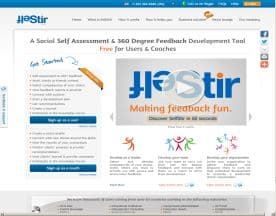
SelfStir offers individual and organizational options that scale differently, which makes it worth examining if your use case sits somewhere between a personal development tool and a company-wide program.
A Note on Implementation
Software alone won't make a feedback culture. The organizations that get lasting value from 360 programs are the ones that connect the feedback cycle to concrete development activity, train managers to use results in coaching conversations, and revisit the process regularly rather than treating it as a once-a-year compliance exercise.
Before you go to market for a platform, make sure there is genuine commitment from leadership to do something with what the software surfaces. The best tool available will underperform in an organization that treats feedback as a ritual rather than a resource.




Making the Final Call
Narrow your shortlist to three or four platforms that fit your scale and process maturity. Run a pilot with a single team before committing to an org-wide rollout. Use that pilot to test the recipient experience, the administrator workload, and the quality of the conversations the reports enable.
The right platform is not necessarily the one with the most features. It's the one your people will actually engage with honestly, and the one your HR team can run without burning out. Start there, and the rest of the selection criteria will sort themselves out.


