


Your alumni are one of the most underused assets your organization has. They have networks, expertise, goodwill, and in many cases a genuine desire to stay connected. The problem is that most institutions manage these relationships the way they manage filing: reactively, inconsistently, and with tools that were never designed for the job. Alumni management software exists to fix that. But buying the wrong platform does not just waste money. It actively discourages the engagement you were trying to build.
This guide is for anyone evaluating alumni platforms for the first time, or reconsidering a system that has stopped delivering. We will cover what the category actually does, where buyers routinely go wrong, and what to look for before you commit.
What This Software Is Actually For
Alumni management software is a purpose-built relationship platform. It stores contact records, tracks engagement history, and gives your team tools to communicate, segment, and coordinate across a community that may span decades of graduates, donors, mentors, or former employees.
That last point matters more than most buyers realize. Alumni communities are not homogeneous. A class from twenty years ago behaves differently from one from three years ago. A mentorship volunteer has different needs from a major donor prospect. Software that treats all of these people as one undifferentiated list will frustrate both your team and your alumni.
The best platforms in this category do three things well. They make it easy to keep contact data clean and current. They give alumni a reason to log in (a directory, a job board, events, community forums). And they give your team visibility into who is engaged, who has lapsed, and what is driving activity in either direction.
The Mistakes Buyers Make First
Confusing CRM with alumni management
General-purpose CRM tools can be configured to track alumni, and many organizations try this route first. The problem is that alumni relationships are bidirectional. Your alumni are not just contacts to be moved through a pipeline. They are community members who should be able to update their own profiles, connect with each other, and participate in events. A standard CRM gives your team a database. A dedicated alumni platform gives your community a home.
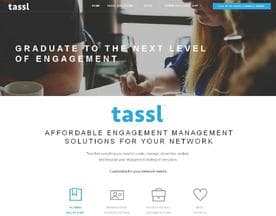
Tassl and ToucanTech are both built around this distinction. The community-facing layer is not an add-on for them. It is the core of the product.
Buying for features you will not use
Alumni platforms can come loaded with capabilities: fundraising modules, event management, career services, mentoring programs, giving campaigns, and more. It is tempting to select the most comprehensive option on the assumption that you will grow into it. In practice, teams that are already stretched thin end up using ten percent of a platform and feeling defeated by the other ninety.
Start with what your team can realistically manage and what your alumni actually want. A smaller institution running a tight operation often needs a clean directory, solid email tools, and an event module. That is it. You do not need a full fundraising suite baked in if you already have a fundraising tool that works.
Underestimating the data problem
Every alumni platform migration starts with the same uncomfortable question: what state is your contact data in? Duplicate records, outdated addresses, missing email addresses, and inconsistent naming conventions are the norm, not the exception. If you are moving from a spreadsheet or a legacy system, budget significant time for data cleaning before go-live. Platforms that offer data hygiene tools or onboarding support for data migration are worth weighting more heavily than they might appear in a feature comparison.
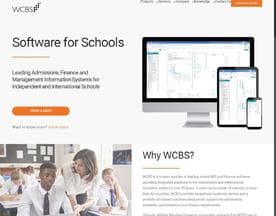
WCBS has a particular focus on the education sector, where this problem is especially acute given the volume of records schools accumulate over decades.
What to Evaluate Before You Decide
The alumni experience, not just the admin dashboard
When you demo a platform, ask to see what your alumni will see when they log in. Is it clean and modern enough that someone will actually use it? Does self-service profile updating work smoothly on mobile? The admin experience matters, but alumni abandonment is what kills engagement programs. If the member-facing portal feels clunky or dated, your alumni will log in once and never return.
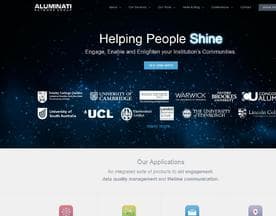
Aluminati Network Group builds explicitly around the alumni-facing community experience, which is worth examining if your primary goal is ongoing engagement rather than one-way communication.
Communication tools and deliverability
Email is still the backbone of alumni outreach, and the quality of a platform's email tools varies considerably. Look at segmentation options, template flexibility, and delivery infrastructure. Ask vendors directly about average deliverability rates and bounce handling. An alumni database is only useful if your messages are actually reaching people.
Integration with your existing stack
Most institutions already have a student information system, a fundraising platform, or a finance tool that holds relevant data. Check whether the alumni platform connects to what you already use, and be specific. Ask whether integrations are native, API-based, or reliant on manual data exports. The latter are a maintenance burden that tends to degrade over time.
Pricing model relative to your community size
Alumni platform pricing often scales with contact volume. If your community is large, this can become expensive quickly. Understand the pricing tier structure before you get deep into an evaluation, not after. Some platforms charge per active user, others charge flat fees for a contact ceiling, and others bundle support and training into the price. These structures are not directly comparable, so build a realistic projection based on your actual community size and growth rate.
A Few More Options Worth Exploring
Platforms like Founderhood cater to startup and entrepreneurial alumni networks, where peer connection and mentorship are the primary value. If your alumni community skews toward that profile, generic platforms may undersell what a more specialized tool can do.
For institutions where fundraising is tightly coupled to alumni engagement, Funderful takes an approach that integrates community-building with giving campaigns rather than treating them as separate workstreams.



The Real Test Is Adoption
You can buy the most capable alumni platform on the market and still see it fail. Adoption is the real metric, on both sides of the relationship. Your team needs to use it consistently enough to keep data current and communications flowing. Your alumni need to find enough value in the platform to log in voluntarily, not just when you email them a link.
That means the selection criteria that matter most are not the ones in the feature matrix. They are the ones you discover by asking: will our team actually use this week to week, and will our alumni come back without being chased? If you can get honest answers to both questions before you sign a contract, you are already ahead of most buyers in this category.


