


Most businesses that struggle with ERP software don't struggle because the product is bad. They struggle because they bought the wrong product for the wrong reasons, often under pressure, often without a clear picture of what they actually needed. The evaluation process is where ERP projects go wrong. By the time implementation starts, the real mistakes are already locked in. This guide is about making better decisions before you commit.
What ERP Actually Does (and What It Doesn't)
ERP stands for enterprise resource planning. The name is old and slightly misleading. Modern ERP is less about "planning" in the strategic sense and more about connecting the operational systems your business already depends on: inventory, purchasing, finance, production, sales, and often HR and project tracking. The core promise is a single source of truth. Instead of your warehouse team working from one system, your finance team from another, and your sales team from a third, everything feeds into and reads from the same platform.
That promise is real, but it comes with conditions. ERP systems don't automatically integrate your processes. They give you the infrastructure to do it. If your processes are inconsistent or poorly documented before implementation, the software will expose that, not fix it. This is the part vendors rarely emphasize during demos.
Why ERP Buying Goes Wrong
The most common mistake is scoping the purchase around current pain points instead of future operational requirements. A business buys ERP to solve a specific problem (say, inventory visibility), then discovers eighteen months later that the system handles manufacturing or multi-entity finance poorly. The workarounds accumulate. People stop trusting the data. The promised single source of truth fragments.
The second most common mistake is treating ERP selection as a technology decision rather than a business change initiative. Your IT team or operations lead matters, but so does the person running your warehouse, the controller, and whoever manages supplier relationships. If selection happens in a silo, you will end up with a system that works for one function and creates friction everywhere else.
A related trap: evaluating systems based on feature lists. Features are easy to demonstrate and hard to contextualize. What matters is how well the system handles your specific workflows at scale. The gap between "the feature exists" and "the feature works the way we work" is where buyers get burned.
How to Structure Your Evaluation
Before you talk to a single vendor, do three things.
First, map your processes at the transaction level. Not at the level of "we manage inventory" but at the level of "here is how a purchase order moves from creation to receipt to payment, and here are the five exceptions that happen every week." Vendors will show you the happy path. You need to test the edges.
Second, define your integration requirements explicitly. What other systems does ERP need to connect to, and how? Payroll, CRM, e-commerce, logistics platforms. Some of these integrations will be native, some will require middleware, and some will be custom work. Understanding this upfront changes the total cost picture significantly.
Third, separate must-haves from nice-to-haves before any demo. Once you are in a vendor demo, the tendency is to get excited about features you didn't know existed. That's fine for discovery, but it can derail prioritization. Know what your non-negotiables are before the demo starts.
Matching the Right System to Your Business
ERP is not one market. A platform built for discrete manufacturing will not serve a professional services firm well, and vice versa. A cloud-native system built for small and mid-sized businesses may lack the configurability a large enterprise needs. Industry fit matters more than general reputation.
For small to mid-sized businesses with complex operations, platforms like aACE Software are worth examining. They sit in the space between lightweight accounting tools and heavyweight enterprise platforms, which is exactly where many growing businesses find themselves underserved.
For manufacturers specifically, the evaluation should center on production scheduling, bill of materials management, and shop floor control. Genius Solutions is one name that surfaces often in made-to-order and engineer-to-order manufacturing contexts, where the process variability tends to break generic ERP configurations.
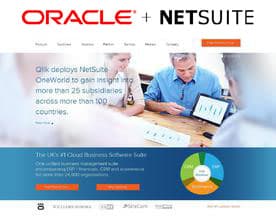
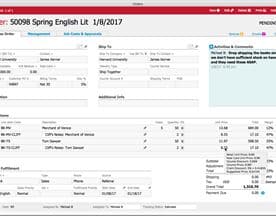
Businesses with multi-entity structures, international operations, or complex revenue recognition requirements will need a platform built to handle that complexity natively. Oracle NetSuite is well-established in this space, particularly for businesses scaling from mid-market toward enterprise, where consolidated reporting and multi-currency handling are non-negotiable.
Cloud-first businesses or those looking to avoid significant infrastructure overhead should pay particular attention to how a platform handles updates, uptime guarantees, and data residency. Versa Cloud ERP is built with cloud-native architecture and targets businesses that want the operational depth of a full ERP without the on-premise overhead.
Implementation Is Part of the Purchase Decision
The cost of implementing ERP is often larger than the software license cost itself. This is not a warning to avoid ERP. It is a warning to price implementation honestly from the start, because the vendors who win on price often win because they have underestimated (or underquoted) implementation complexity.
Ask every vendor three questions about implementation: What does a typical timeline look like for a business of our size and complexity? What is the ratio of implementation cost to license cost in deals similar to ours? And who specifically will be doing the work (the vendor's own team, a certified partner, or a third party)?
The answers will tell you more about the real cost than any pricing sheet.
What Good Data Migration Looks Like
Migrating your data into a new ERP is one of the most underestimated parts of the whole process. Old systems accumulate years of inconsistent naming conventions, duplicate records, and fields that no one uses but everyone assumes are important. Before migration, you need a data audit: what goes across, what gets cleaned, and what gets archived rather than transferred.
A vendor or implementation partner who doesn't discuss data migration in the presales conversation is a vendor who hasn't done enough of these projects. Push on it early.





The Question to Ask Yourself Last
Once you have shortlisted two or three platforms, there is a final question worth sitting with: are we ready to implement this, or do we need to get our own house in order first? ERP amplifies your existing processes. If those processes are well-designed and consistently followed, the system will make them faster and more visible. If they are inconsistent, the system will make the inconsistency harder to ignore and harder to manage. Getting honest about that before you sign is the most valuable thing this guide can offer.


