


Most software purchases start with a features list. Call centers are particularly guilty of this. You build a spreadsheet, tick off IVR (interactive voice response), call recording, and CRM integration, and hand it to three vendors. Then you pick the one with the best demo. Six months later, agents are frustrated, managers are pulling reports manually, and the features you bought are not working the way they looked in the presentation. This guide is about avoiding that outcome.
The Features You Focus On Are Rarely the Problem
The core telephony features in most modern call center software are broadly comparable. ACD (automatic call distribution), IVR, call recording, real-time dashboards, and basic CRM hooks are table stakes at this point. If a platform is missing any of those, it does not belong on your shortlist. But checking for them does not tell you how well they actually work at your volume, with your team structure, and alongside the other tools you already run.
The questions worth asking are harder. How does the platform behave when your call volume spikes unexpectedly? What happens to queued calls if the internet connection drops? How long does it actually take to add a new campaign or change routing rules without a developer? These are operational questions, and vendors rarely lead with the honest answers.
Integration Is Where Deals Quietly Fall Apart
More call center failures trace back to integration than to any single missing feature. Your agents are not living inside the call center platform. They are toggling between it, a CRM, a ticketing system, a knowledge base, and sometimes a half-dozen internal tools. If those systems do not talk to each other cleanly, agents compensate by copying and pasting, by memory, and by workarounds that degrade quality and slow handle times.
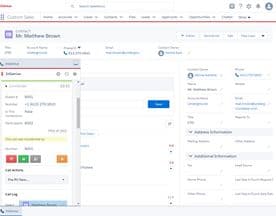
InGenius Software is built specifically around this problem, focusing on CTI (computer telephony integration) that embeds telephony directly into platforms like Salesforce and ServiceNow. That is a different product philosophy than a standalone platform that offers an API and leaves integration as your problem. Neither approach is universally right, but you should know which one you are buying and why.
Before you shortlist anything, map every system your agents use in a typical call. Then ask each vendor to walk you through exactly how their platform connects to each one. Not a conceptual answer. A working demonstration with your actual data environment, or at least a very close approximation. If they cannot or will not show you that, treat it as a signal.
Outbound and Inbound Are Not the Same Discipline
Many platforms are genuinely strong in one direction and compensate in the other. Inbound-focused platforms are built around queue management, service levels, and agent efficiency. Outbound-focused platforms, particularly those used in sales or collections environments, are built around dialers, campaign management, and compliance with call regulations.
LeadDesk is an example of a platform that leans into outbound sales and lead generation, with predictive and power dialing as central features. That makes it a natural fit for certain environments and a poor fit for others. If your operation mixes both, you need to be especially rigorous about testing, because blended environments expose the seams in any platform.
Do not let a vendor's general positioning substitute for a specific conversation about your ratio of inbound to outbound, your peak hours, and whether their architecture actually handles your blend without compromise.
Scalability Is a Claim Worth Stress-Testing
Every vendor will tell you they scale. What they mean varies dramatically. Some platforms scale elegantly across geographic locations, time zones, and large agent counts without configuration complexity growing proportionally. Others technically support large numbers but require significant administrative overhead to manage at scale, or charge pricing structures that make growth punishing.
Talkdesk and 3CLogic both position themselves as enterprise-grade cloud contact center platforms, which puts scalability at the center of their pitch. The right way to evaluate those claims is to find customers who are meaningfully larger than you are now and ask them direct questions about operational complexity and pricing trajectory as they grew. Reference calls arranged by the vendor are not useless, but ask for references from customers they did not suggest.
If your call center is likely to grow, or contract seasonally, model what the software costs and how it behaves at twice and half your current volume. Do this before you sign.
The Admin Experience Is Underrated
Buyers focus on the agent experience during a demo and forget to examine what it costs to manage the platform day to day. Can supervisors update call flows without raising a support ticket? Can you build new reports on the fly or only choose from a fixed library? How long does onboarding a new agent actually take in the system?
The platforms that win long-term tend to be the ones that give non-technical administrators genuine control. If every routing change requires a call to vendor support or an internal IT request, the platform is working against your operational agility, not for it.
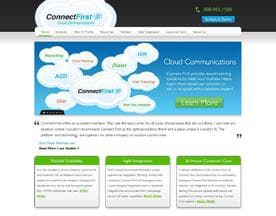
ConnectFirst emphasizes configurable workflows and campaign management that supervisors can control directly, which matters most in environments where call flows change frequently. It is worth asking any vendor to let your operations team, not just your IT team, run the evaluation. Their friction points will be different, and usually more predictive of day-to-day satisfaction.



What to Actually Do Before You Sign
Run a structured pilot with real agents on real calls for at least two to three weeks. That is long enough for the novelty to wear off and for genuine friction to surface. Track handle times, first-call resolution rates, and agent-reported issues. Compare them to your baseline from your current platform or process.
Get specifics about support. Not the tier names, but actual response times, escalation paths, and whether you will have a named account manager or a ticket queue. Ask what the vendor's process is when something breaks during your peak hours.
Read the contract carefully for data portability. When you eventually switch platforms, which you will, you need to extract your call recordings, contact data, and reporting history without friction. Some vendors make this easy. Others use it as lock-in.
The best call center platform is the one your agents actually use well, that your supervisors can manage without constant IT involvement, and that costs you roughly what you planned when you are twice the size you are now. That combination is rarer than any vendor demo will suggest.


